South Korea · KTX & SRT high-speed Capital to coast

Seoul to Busan Train

The length of Korea, in one afternoon — on two competing high-speed operators.

The Seoul to Busan train runs the 417 km Gyeongbu high-speed line in as little as 2 hours 15 minutes, and it's actually run by two separate operators: KTX (Korail, from Seoul Station) and SRT (SR Corporation, from Suseo Station) — dozens of departures a day between them. Here is every time, class, station and ticket tip you need for the Seoul to Busan train.

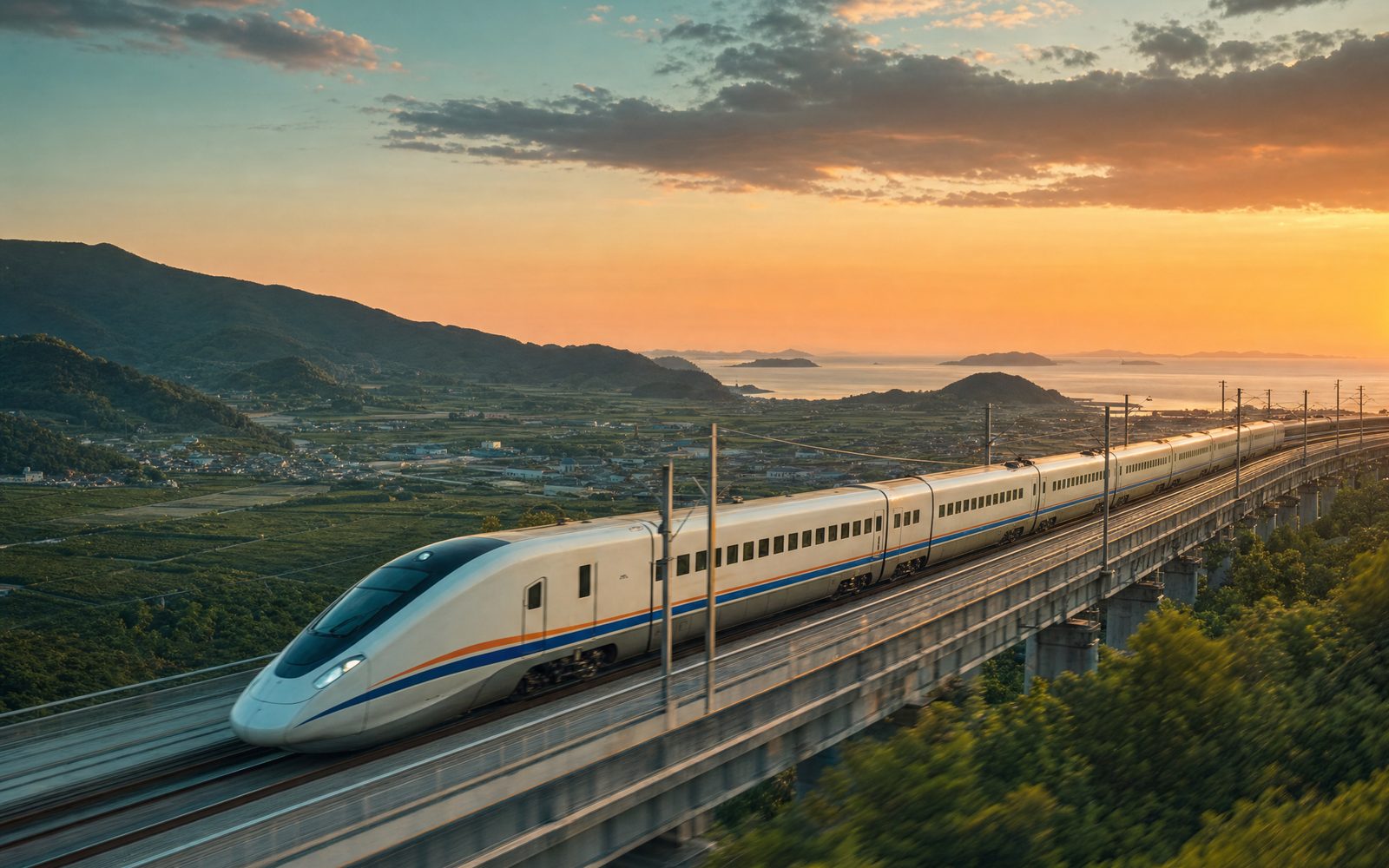
A Korean high-speed train speeding south from Seoul toward the Busan coast Seoul → Busan, KTX or SRT
Seoul→Busan
2h 15m
fastest departure, city centre to city centre
417 kmGyeongbu line
2 operatorsKTX & SRT
from $34Standard fare

Live times and fares across both KTX and SRT, powered by our booking partner.

The route

The Seoul to Busan train route

One high-speed spine runs the length of the peninsula — served by two competing operators. The Seoul to Busan train heads south down the 417 km Gyeongbu high-speed line, from the capital in the north to the southern port city in as little as 2 hours 15 minutes — a fraction of the drive.

At a glance, the Seoul to Busan train covers a distance of about 417 km in a journey time of roughly 2 hours 15 minutes to 2 hours 40 minutes depending on stops and operator, with average travel times of two and a half to three hours across the day. It is one of the most popular train routes in South Korea: between KTX and SRT there are frequent departures every day, and Seoul to Busan train tickets start from around $34 (SRT fares typically run a little less), so whatever your travel date there is almost always a fast, affordable departure within the hour.

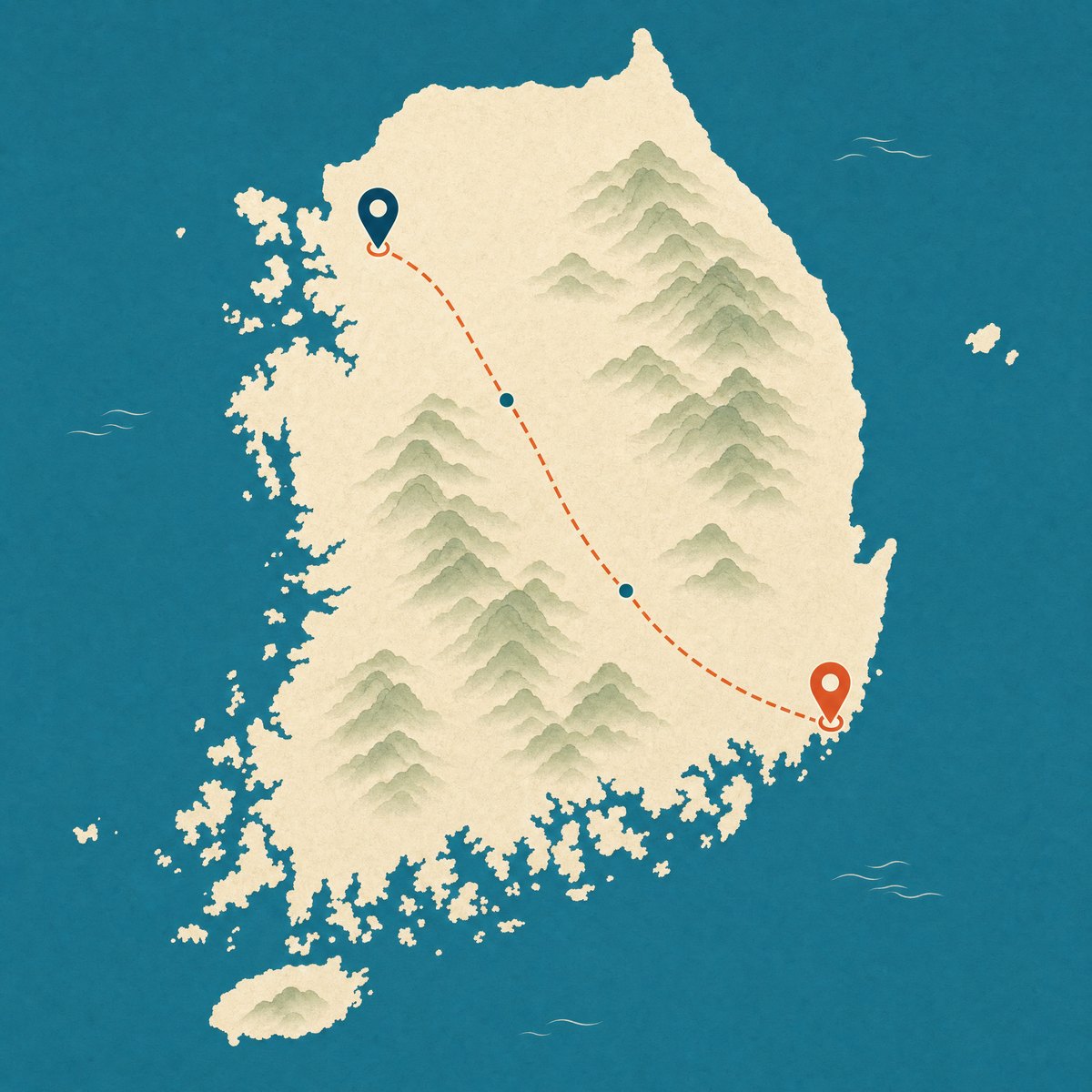
Illustrated map of South Korea showing the Seoul to Busan high-speed route down the Gyeongbu line, from Seoul in the north-west via Daejeon and Dongdaegu to Busan on the south-east coast SeoulSeoul Stn (KTX) · Suseo Stn (SRT) Daejeon Dongdaegu BusanBusan Station · the coast
2h 15mFastest, city to city
417 kmGyeongbu line
KTX & SRTTwo operators

The Seoul to Busan train is a north-to-south run down the Gyeongbu high-speed line, the busiest rail corridor in South Korea. Fast services leave the capital and reach the southern coast in a little over two hours, calling only at the biggest intermediate cities — usually Daejeon in the centre and Dongdaegu near Daegu — before rolling into Busan Station by the sea. There are five stations on the KTX routing in total, and SRT joins the same high-speed line via its own connector from Suseo.

Because it is a purpose-built high-speed line rather than a shared motorway, the timing barely changes with traffic or time of day. Between KTX and SRT there are around 85 daily departures, running from about 05:13 in the morning until roughly 22:49 at night, so for much of the day there is a Seoul to Busan departure every 15 to 30 minutes across the two operators — turn up, tap in and go, whether you booked weeks ahead or an hour before.

The distance from Seoul to Busan is about 417 km, and the fastest Seoul to Busan train covers it in as little as 2 hours 15 minutes at up to around 300 km/h — the shortest travel time between the two cities by any means. Even the slower departures, with a couple more intermediate stops, keep the average travel time well under three hours, which is why high-speed rail has taken the lion's share of long-distance trips down the peninsula from the plane and the express bus since KTX opened the line in 2004, with SRT adding a second operator on the same corridor from December 2016.

Why the train wins

Seoul to Busan in 2h 15m

The whole point of the Seoul to Busan train is speed without the airport hassle. Here is how the fastest KTX or SRT departure compares with the other ways down the peninsula, city centre to city centre.

Train (KTX/SRT)
~2h 15m
Flight (door to door)
~3h+
Express bus
~4h 20m
Car
~4h+

Times are typical city-centre to city-centre. The Seoul–Busan flight is about an hour in the air, but Gimpo and Gimhae airports sit outside the two centres and check-in and security add up — so the train, whether KTX or SRT, usually wins door to door. The bus and car are cheaper but slower and tied to the Gyeongbu Expressway's traffic.

For a lot of travelers the Seoul to Busan train has simply become the default. It is fast, but it is also reliable and smooth: departures leave on time, the ride is quiet and modern, and you spend the journey watching the Korean countryside and the occasional city skyline slide past rather than sitting in traffic or an airport lounge. That mix of speed, comfort and reliability is why the high-speed train is now the most popular way to travel between Seoul and Busan, for weekend trips and business travel alike.

Two operators, one line

KTX vs SRT on the Seoul to Busan train

Unlike some countries' single-operator lines, the Seoul to Busan train is genuinely run by two separate companies on the same Gyeongbu high-speed corridor — KTX, run by the state railway Korail since 2004, and SRT, run by SR Corporation since December 2016. Both are shown in the live search above, so it's worth comparing them before you book.

KTX

KTX · Korail's flagship high-speed train

Launched in 2004, KTX was South Korea's first high-speed rail service and remains its best-known line, running the length of the Gyeongbu corridor from central Seoul Station to Busan Station.

  • Run by Korail, South Korea's state rail operator
  • Departs central Seoul Station
  • In service on this route since 2004
  • Standard and First Class seating on every train
  • Calls at Daejeon and Dongdaegu on most services
SRT

SRT · SR Corporation's high-speed train

Launched in December 2016, SRT is run by SR Corporation, a separate company majority-owned by Korail but operated as its own brand with its own ticketing system, joining the same Gyeongbu high-speed line via a dedicated connector from Suseo Station.

  • Run by SR Corporation, a distinct operator from Korail
  • Departs Suseo Station, in southern Seoul
  • In service on this route since December 2016
  • Standard and First Class seating, typically somewhat cheaper than KTX on this corridor

Whichever you choose, search KTX and SRT side by side in the live times and fares above and pick the departure, station and class that suit your day.

The trains on the line

The Seoul to Busan train you board depends on which operator you pick. KTX runs a mix of the original KTX‑I sets, the newer KTX‑Sancheon, and its latest train, the KTX‑Cheongryong, on some departures. SRT runs its own EMU‑320 high-speed sets, built by Hyundai Rotem. Both are broadly comparable, Korean-built high-speed trainsets that cruise at up to around 300 km/h on the dedicated tracks of the Gyeongbu line, which is what pulls the fastest journey times down to roughly 2 hours 15 to 2 hours 40 minutes depending on stops.

If you would rather trade a little speed for a lower fare, slower regular trains such as the Korail-operated ITX‑Saemaeul also run the Seoul–Busan corridor on the conventional line, taking closer to five hours with more stops at intermediate stations. For most travellers, though, KTX or SRT is the obvious choice — either gets you there fastest and, once you factor in the airport run, is usually the most convenient way to travel as well.

Onboard

Classes on the Seoul to Busan train

Both KTX and SRT offer two classes on the Seoul to Busan train — naming varies slightly by operator, but every seat is reserved, and the step up to First Class buys more room and a quieter carriage on either.

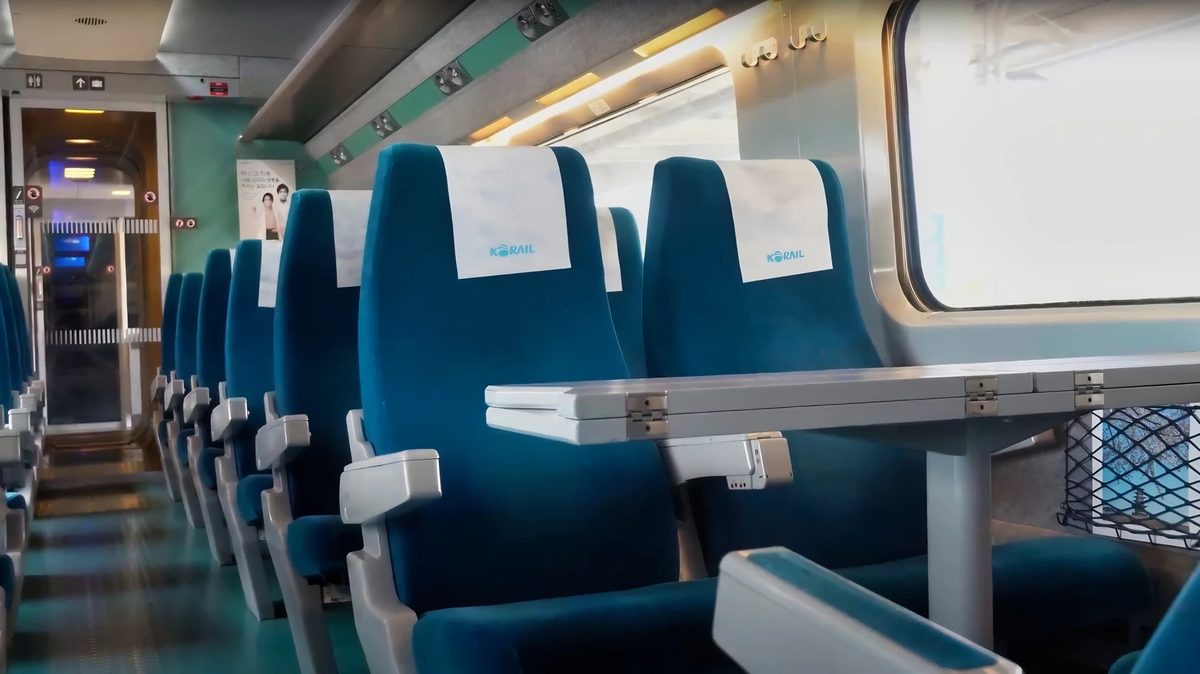
Standard Class carriage on a Seoul to Busan high-speed train, rows of reserved seats with large windows
Standard

Standard (Economy)

  • Comfortable reserved seats in a bright 2-plus-2 cabin
  • Power outlets and large windows for the ride south
  • Vending machines and luggage space onboard
  • The everyday way to ride the Seoul to Busan train

Standard · from about $34 on KTX, typically a little less on SRT — search live fares above

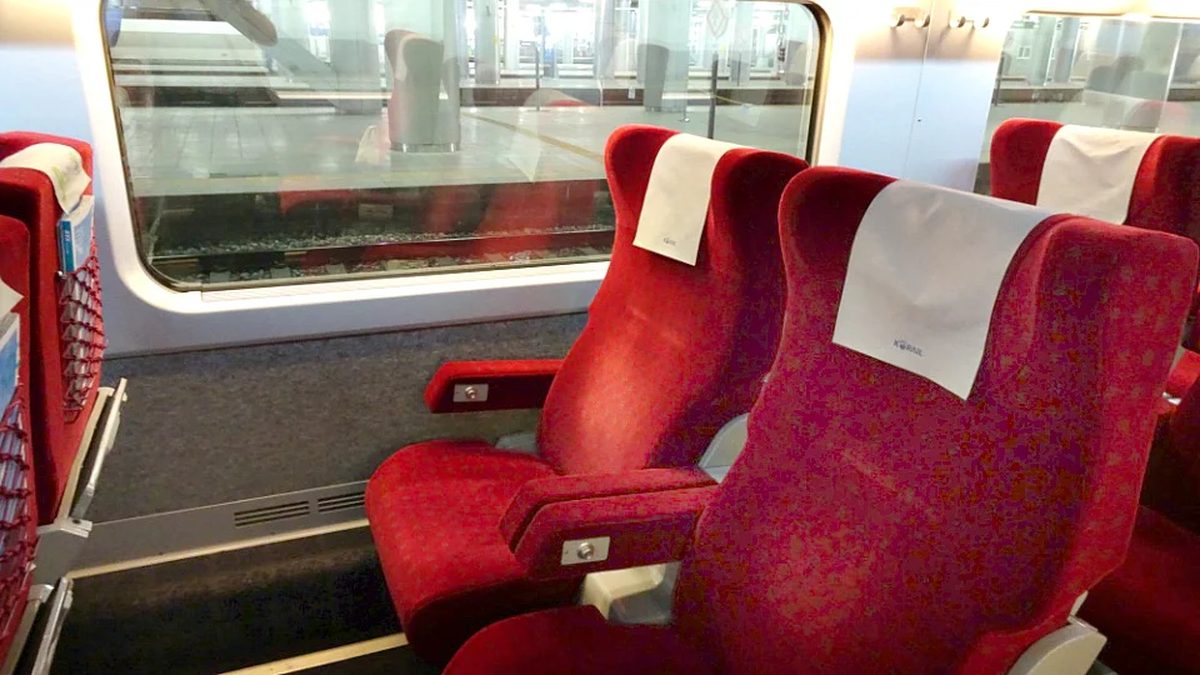
First Class carriage on a Seoul to Busan train, wide 2-plus-1 leather seats with extra legroom
First class

First Class

  • Roomier 2-plus-1 seating with more legroom
  • A quieter, calmer carriage with fewer passengers
  • More luggage space and a more private seat
  • A modest step up for a long ride or a work trip

First Class · a step up on Standard — see live fares above

Both classes on the Seoul to Busan train are built for a comfortable two-hour-plus run, with the same comfortable amenities throughout on KTX and SRT alike: air conditioning, reserved comfortable seating with power outlets at every seat, big windows onto the Korean countryside rolling past, and vending machines and luggage storage onboard. Standard (economy class) is a 2-plus-2 layout and the everyday choice; First Class seats step up to a roomier 2-plus-1 layout with more legroom, more space and a quieter carriage — worth it on a long ride.

Fares vary by class, operator and how far ahead you book. Standard KTX tickets start from around $34, and SRT fares are typically somewhat cheaper (commonly cited as roughly 10–15% less) for a broadly comparable ride. Because prices move with demand, the simplest way to get the best seat for your date is to search the live prices above and book the operator and class that suit your trip.

A Korean high-speed train sweeping through the countryside on the way from Seoul to Busan

Capital to coast, in one clean run

Find trains
City ends

Where the Seoul to Busan train starts and ends

Knowing which station you leave from in Seoul and where you arrive in Busan saves time on either side of the ride — and on the Seoul side, it depends which operator you booked.

The Seoul skyline at dusk with the mountains and N Seoul Tower behind the city
Departure · Seoul

Seoul

Two separate stations serve Seoul on this route. KTX trains leave from central Seoul Station, a major hub with subway and airport-rail links. SRT trains leave from Suseo Station instead, a different station in the Gangnam/Suseo area of southern Seoul — check your ticket to see which one you need.

Seoul Station (KTX) · Suseo Station (SRT)
Busan waterfront at golden hour, with the harbour, hills and colourful terraced houses
Arrival · Busan

Busan

Both KTX and SRT arrive at Busan Station, right by the waterfront — a short hop from the Jagalchi Fish Market and the lively Nampo-dong district of restaurants and shops.

Busan Station — by the harbour

Both ends of the Seoul to Busan train sit right in the thick of things. In Seoul, central Seoul Station links straight to the subway and the airport train, while Suseo Station connects to its own subway line in southern Seoul. In Busan, Busan Station is a short ride or walk from the harbour, Jagalchi Fish Market and Nampo-dong, with the subway and buses fanning out to Haeundae Beach and the rest of the coast — so you step off the train and into the city with barely a transfer, whichever operator you rode.

Navigating the stations is easy, even on a first visit. Seoul Station, Suseo Station and Busan Station are all well signposted in English, with ticket desks, machines, luggage storage, shops and places to eat, and boarding is a simple walk down to the platform a few minutes before departure. Because Seoul Station and Suseo Station are different stations some distance apart, double-check which one your ticket departs from before you travel — the live search above shows the right station for each departure. Busan Station is the southern terminus of the line for both operators, so you arrive right by the water — no airport transfer, no long walk, just off the train and into the city.

Good to know

Riding the Seoul to Busan train

A few things worth knowing before you ride south on KTX or SRT.

1

Reserve your seat

Every seat on the Seoul to Busan train is reserved, so a ticket ties you to a specific departure. On busy weekends and holidays, popular times sell out — book ahead when you can.

2

Double-check your Seoul station

KTX leaves from Seoul Station, SRT from Suseo Station — they're different places on opposite sides of the city, so confirm which one is on your ticket and leave a little extra time to find your platform on a first visit.

3

Standard is plenty

Standard class is comfortable for the two-hour run; save First Class for when you want the extra room, a quieter carriage or a work trip.

4

Book ahead for weekends

Both KTX and SRT are popular on this line, especially on Friday evenings and holiday weekends, so book a few days ahead if your date is fixed.

5

Sit on the right

Heading south from Seoul, a window seat gives you the countryside, rivers and hills rolling past before Busan's harbour opens up at the end.

6

Search before you go

Times and fares shift with class, operator and demand — use the search above to compare the latest KTX and SRT options before you travel.

Train vs the alternatives

Seoul to Busan by train, plane, bus or car

The honest comparison of the main ways down the peninsula, so you can choose for your trip.

Seoul to Busan: the ways to travel, compared
ModeCity-to-city timeTypical costNotes
Train (KTX/SRT)~2h 15mfrom ~$34, less on SRTFastest door to door, frequent daily departures on two operators, Standard & First Class
Flight~3h+ door to doorvaries~1h in the air, but Gimpo/Gimhae airports and security add up
Express bus~4h 20mcheapestFrequent and low-cost, but the slowest and tied to traffic
Car~4h+Fuel + tolls~417 km on the Gyeongbu Expressway; flexible, but tolls and traffic

For a long time the choice down the peninsula was the express bus or an internal flight. The bus is still the cheapest way to travel and runs constantly, but at well over four hours it is the slowest, and both it and the car are hostage to the Gyeongbu Expressway at peak times.

The flight looks quick on paper at about an hour, but Gimpo and Gimhae airports sit outside the two city centres and check-in and security eat the saving. For a straightforward centre-to-centre trip the Seoul to Busan train is the fastest and calmest option — and the one most travellers reach for.

Costs vary, but the broad picture is simple. The express bus is the cheapest way to travel and runs constantly through the day; the car makes sense only if you need one at both ends, given tolls and Gyeongbu Expressway traffic; and flying rarely saves time once you add the trip out to Gimpo and back from Gimhae. For a comfortable, reliable, centre-to-centre journey at a fair price, the Seoul to Busan train wins on the balance of speed, cost and convenience — which is why it carries so many of the travelers making this trip every day.

Tickets

Booking Seoul to Busan train tickets

Because every seat on the Seoul to Busan train is reserved, booking is really about locking in the departure and class you want before they fill up.

You can buy tickets online in advance or from the ticket desks and machines at the station on the day. Same-day tickets are usually available midweek, but popular weekend, holiday and early-evening departures sell out, so booking in advance is the safest way to secure the time you want. Booking online also means you can compare departures and pick your seat before you arrive, rather than joining the queue at the ticket desks.

Ticket prices vary depending on the travel date, the operator and the class, with Standard Seoul to Busan fares starting from around $34 on KTX (SRT tends to run a little cheaper) and First Class a modest step up on either. A limited number of cheaper advance fares and discounts can appear if you book early, so it pays to check the search above for your date.

The simplest way to book train tickets for the Seoul to Busan train is the live search at the top of this page: enter your travel date, compare KTX and SRT times and prices side by side, choose Standard or First Class, and secure your seat in a few taps. Prices and availability update in real time, so you always see what is actually bookable for your day, on either operator.

Once booked, your Seoul to Busan train ticket is an e-ticket you can keep on your phone — there is no need to print anything or collect a paper ticket at the station, so you can walk straight to the platform. Plans change, of course, and reserved KTX or SRT tickets can usually be changed or refunded before departure, which is another reason booking online in advance is low-risk: you lock in a good fare and a guaranteed seat while keeping some flexibility if your travel date moves.
Find trains
Plan your trip

Planning your Seoul to Busan train trip

The Seoul to Busan train is the fastest and most popular way to travel between Korea's two biggest cities, and a little planning makes the trip smooth.

Step 1

Pick your date & compare

Choose your travel date, then compare KTX and SRT departure times and ticket prices side by side. With frequent daily departures across both operators there is almost always a fast Seoul to Busan train within the hour, making it easy to fit the train around your day.

Step 2

Book in advance

Popular weekend and holiday departures — and the cheapest tickets — sell out first, so book your Seoul to Busan train tickets early; midweek, same-day tickets are usually easy to find. Standard-class tickets start from about $34, with First Class a modest step up.

Step 3

Board with your e-ticket

Your Seoul to Busan train ticket lives on your phone — no printing, just walk straight to the platform. Reserved KTX or SRT tickets can usually be changed or refunded before departure, so booking ahead in advance stays low-risk if your travel date moves.

However you travel, the Seoul to Busan train delivers the shortest travel time over the 417 km distance, a comfortable modern ride and reliable daily departures — the reasons KTX and SRT together have made this one of the most popular rail journeys in South Korea. Search the live KTX and SRT times and ticket prices above, choose your operator and class, and book the Seoul to Busan train that fits your travel date and your day.

Questions

Seoul to Busan train — frequently asked questions

How long is the Seoul to Busan train?

The fastest Seoul to Busan trains cover the 417 km Gyeongbu high-speed line in as little as 2 hours 15 minutes on SRT, or 2 hours 18 minutes on KTX. Services with more intermediate stops on either operator take a little longer, closer to 2 hours 40 minutes to 3 hours.

Who operates the Seoul to Busan train?

The Seoul to Busan train is run by two separate operators: KTX, run by the national railway Korail since 2004, and SRT, run by SR Corporation since December 2016. KTX departs from Seoul Station; SRT departs from Suseo Station. Both arrive at Busan Station. Search live times and fares for both through the box above.

What is the difference between KTX and SRT?

KTX and SRT run on the same Gyeongbu high-speed line and offer similar speeds, comfort and classes. The main practical differences are the departure station in Seoul — Seoul Station for KTX, Suseo Station for SRT — and price, with SRT fares typically running somewhat cheaper than the equivalent KTX fare.

How often do Seoul to Busan trains run?

Between KTX and SRT there are around 85 daily departures between Seoul and Busan, roughly every 15 to 30 minutes for much of the day, running from about 05:13 in the morning until roughly 22:49 at night.

What classes are on the Seoul to Busan train?

Both KTX and SRT offer two classes: Standard (Economy) and First Class, though naming varies slightly by operator. First Class has roomier 2-plus-1 seating, fewer passengers per carriage and more luggage space, for a modest step up in price. All seats on both operators are reserved.

Where do the Seoul to Busan trains stop?

Express services run almost non-stop, while others call at major intermediate stations along the Gyeongbu line such as Daejeon and Dongdaegu (Daegu). There are five stations on the KTX routing in total between the two cities; SRT joins the same high-speed line via its own connector from Suseo.

How much does the Seoul to Busan train cost?

Standard-class Seoul to Busan tickets start from around 34 US dollars on KTX, with SRT fares typically running somewhat cheaper (commonly cited as roughly 10 to 15 percent less) and First Class a modest step up on either. Fares vary by operator, class and how far ahead you book, so search live prices in the box above before you travel.

Is the train faster than flying between Seoul and Busan?

For most travellers, yes, door to door. The flight itself is about an hour, but with travel to Gimpo and Gimhae airports, check-in and security it usually adds up to more than three hours. KTX and SRT both take around 2 hours 15 to 2 hours 20 minutes from city centre to city centre on their fastest departures.

Which stations does the Seoul to Busan train use?

KTX departs from central Seoul Station, while SRT departs from Suseo Station in southern Seoul — two different stations, so check your ticket. Both operators arrive at Busan Station, which sits close to the waterfront, the Jagalchi Fish Market and the lively Nampo-dong district.

Find trains

Ready for the Seoul to Busan train?

See live times and fares for KTX and SRT, compare Standard and First Class, and book the departure that suits your day.

Find trains